Re-engagement: how to awaken inactive contacts
Are you investing in acquiring new leads to sell your products?
Lead generation is one of the goals that many of our clients set for the growth of their online business. However, there is often a tendency to underestimate the potential value of contacts already acquired, even if they have been inactive for some time.
Over the years we have tested multiple strategies for growing different types of businesses and found that reactivating an inactive contact requires less effort and resources than generating a new lead. But how do you plan a re-engagement strategy?

When
First, it is important to define what we can consider inactive contacts. These are people who have had contact with the company in the past but have not interacted with it for some time. The time distance since the last activity is an indicator to be taken into account and can impact the effectiveness of the re-engagement strategy.
The data highlight that the percentage of users re-engaged in a time segment of less than 3 months is 28.5 percent, this drops sharply as the time interval between the last communication and the re-engagement attempt increases. This confirms the importance of timely intervention to recover contacts who have shown a decline in interest in the brand.
Who
For which users can we evaluate a re-engagement strategy? Which users should actually be considered “inactive”? As always, the answer is “it depends.”
- On behavior: lack of opens and clicks are not the only indicators of user inactivity, we should broaden the evaluation to include other behaviors such as the period since the last purchase or since the last session on the website.
- From frequency: if you send emails daily, it is reasonable to consider 90 days a period of inactivity. If they are monthly newsletters, the period of inactivity to be considered may be longer, such as between 6 months and a year.
- From Customer lifecycle: the period to consider also varies according to the customer lifecycle. For products such as automobiles, the lifecycle may be very long, while for everyday consumer products the lifecycle may be only a few days or weeks.
How
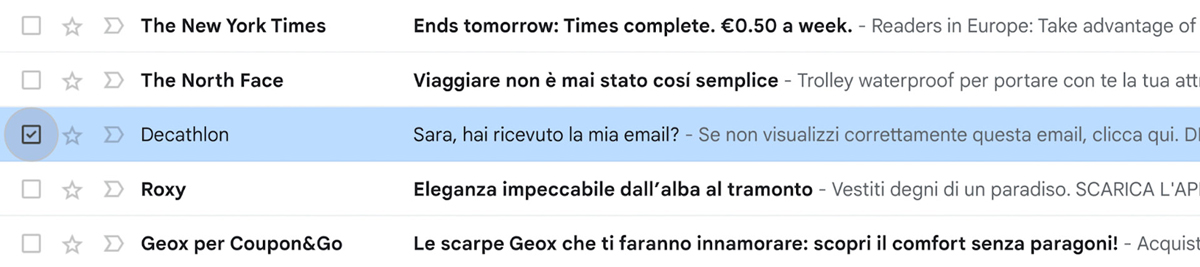
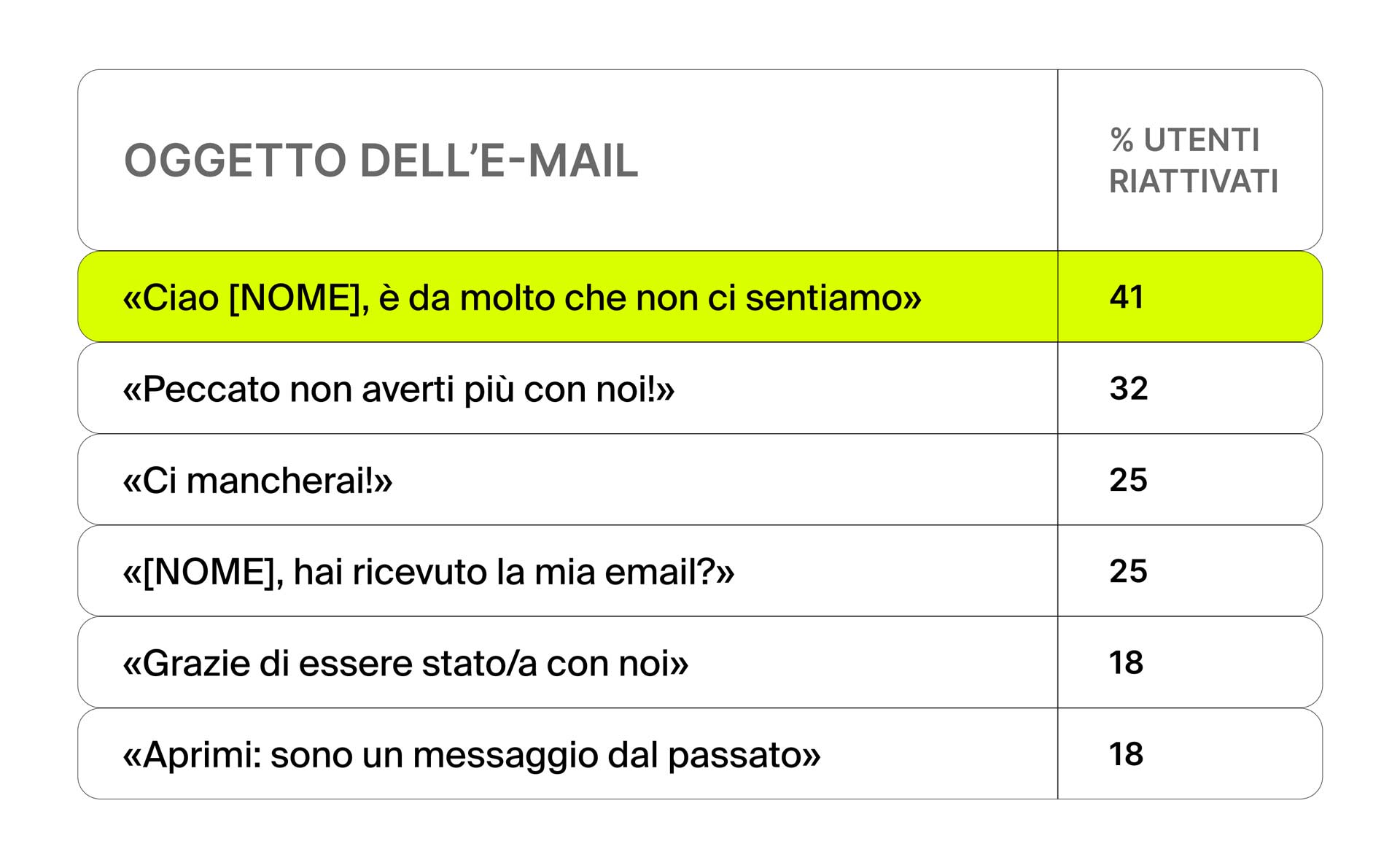
To draw the attention of a user who has not received communication for some time, it is important to surprise him or her, which is why the subject line of the email should use a different tone of voice than usual. Here you can find some examples to use in order of effectiveness:
Regarding the content of the communication you can consider several options:
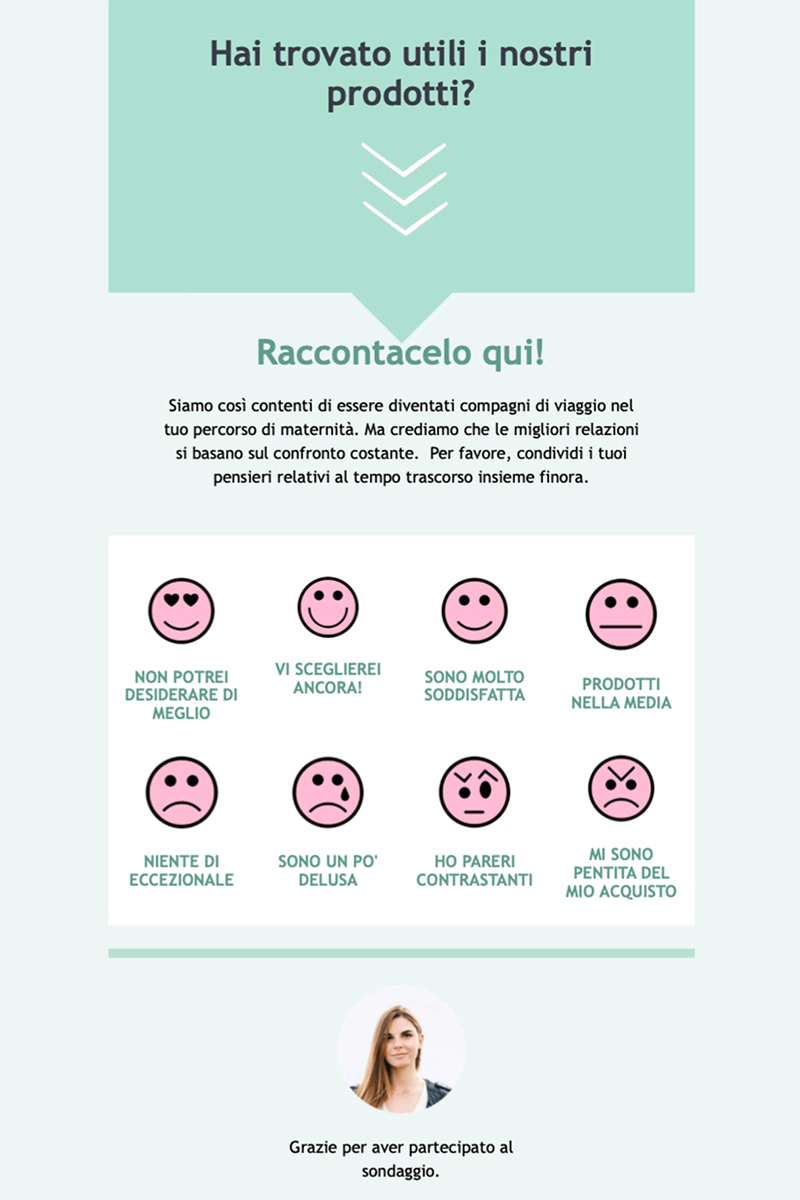
- Surveys: can give you useful information about users’ interests and preferences that you can then use to personalize the communication and promotions you send them. Also with a survey you can collect feedback on why inactive contacts have stopped interacting with the company. This feedback can be used to improve the products or services you offer and to create more effective marketing campaigns in the future.
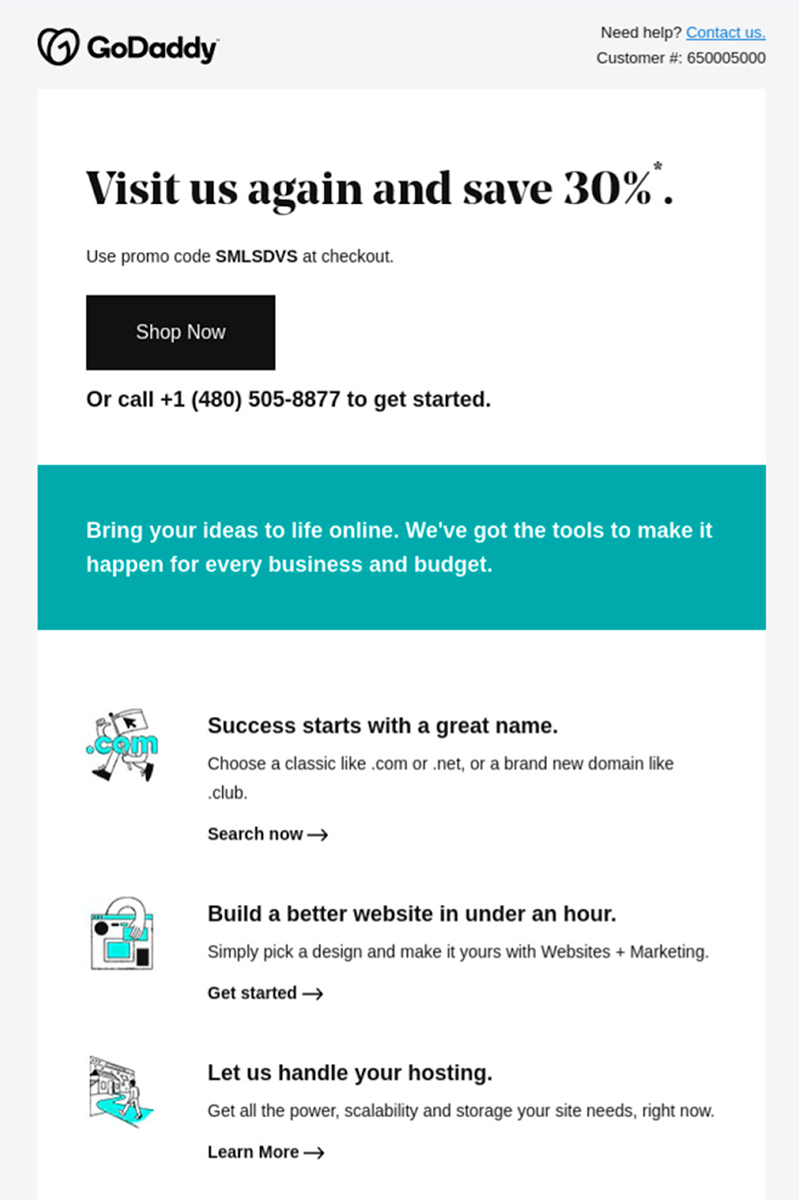
- Coupons and discounts: promotions are the most effective way to try to reactivate a user; try offering an expiring discount code and monitor its use.
- Product recommendations: these communications can be useful for reminding your recipients what they can find new and what they might miss if they don’t stay current. In addition, you could tailor your communications to your customers’ preferences, suggesting similar or complementary products to those they have already purchased. In this way, you could increase your chances of generating sales and building customer loyalty.
Data show that the vast majority of users targeted by a re-engagement campaign re-engage after only one communication, however, you can automate a series of communications (best not to exceed 3) through which to classify contacts in order to automatically update your database.
An example of an automatic communication flow could be:
At 70 days
since the last interaction:
Sending the first reactivation message
At 90 days
since the last interaction:
Sending the second reactivation message to those who did not open the first one
At 110 days
since last interaction:
Sending the third reactivation message to those who opened neither the first nor the second one
At the end of the flow, it is possible to consider archiving completely inactive contacts. The removal of an inactive contact from the database should not be viewed as a negative event, but as an opportunity to update and clean the database, improving campaign performance and increasing delivery rates, all to the benefit of the sender’s reputation.
In summary, inactive contact reactivation campaigns are an excellent opportunity to increase the loyalty of existing customers and reduce the cost of acquiring new customers.
Try applying this strategy for your business, you will be surprised at the results you can achieve!
More articles

Finding the right web agency for your business is critical; it can revolutionize the way you can reach your customers and beyond!

AI opens up new opportunities, but it also presents challenges and obstacles to overcome. Let's find out in this article dedicated to ChatGPT and beyond!

Don't be fooled by appearances. Opting for a free website creation can pose numerous risks to your business. Let's find out what they are.